Monday, April 27, 2015

A Thunderclap Storm for Our ReTweet Day #MFRWauthor #MFRWorg

Marketing for Romance Writers monthly retweet day is 5/13.
This month we are sharing and supporting our thunderclap campaigns.
 
First, you need to create a Thunderclap campaign
  • Set the go live date for May 13, the date of our #MFRWauthor retweet day.
  • Also use #MFRWauthor in your Thunderclap message.

Second, add your url to the comment section of the blog. It normally takes three days for a thunderclap campaign to go live so don't delay.

Third, support the main campaign. Here is the campaign for MFRW
Fourth, support the other campaigns listed. Remember to check back often so you support everyone who is doing this.

Here's to creating an awesome storm on May 13,
Tina
Tina Gayle writes stories with strong women fiction elements. Visit her website and read the 1st chapter of any of her books. www.tinagayle.net


Sunday, April 26, 2015

Novel Theme. Author Theme. What’s The Difference, and Do You Have One? #MFRWauthor #MFRWorg #WriteTip @MoniqueDeVere


Mention theme and some writers will groan. There’re so many, aren’t there? There’s theme, then there’s theme, and then there’s... well, theme. We have the story theme, author theme, and tropes—which some writers/readers call book theme.

Today I’m going to be talking about author theme, but first let’s take a quick look at the other two.

Story theme

Story theme is the same as the novel’s theme and can  usually be described in a single sentence. Something like, “action speaks louder than words”. It’s what the story is about, the message beneath the surface and it has nothing to do with your plot points on an obvious level. For instance, you might have a character, or even set of characters, who constantly say one thing but do another. That would be the story theme “action speaks louder than words”. 

I normally look to Idioms to find a nice pithy statement for my story themes. But there’re other places we can also look. I’ll list a few in case you might like a bit more of an example.
Story themes can be boiled down to traditional sayings.

Idioms – a phrase with a different figurative and literal meaning.
Exp: “Rags to Riches.” Or “Keep a stiff upper lip.”

Adage – a memorable, traditional saying that has gained credibility through long use.
Exp: “Where there’s smoke, there’s fire.” Or “Things are not always what they seem.”

Proverb – a short saying which expresses common sense or a basic truth.
Exp: “A monkey in silk is a monkey no less.” Or “It’s no use locking the stable door after the horse has bolted.”

Maxim – a well known saying that expresses a truth or rule about life or conduct.
Exp: “Opposites attract.” Or “Nothing ventured, nothing gained.”

Epigram – a clever statement expressed in the form of a concise amusing or satire poem.
Exp: “I can resist anything except temptation.” Or “No one can make you feel inferior without your consent.”

Tropes

Another book “theme” people speak of, is the story trope. These are tried and tested, reoccurring literary devices used to instantly tell the reader what sort of romance she’s picking up. Such tropes are: the second chance/reunion romance, secret baby, friends-to-lovers, older brother’s best friend, matchmaker, office romance, one-night-stand, sexy protectors and the list goes on. Used in category romance/commercial fiction, tropes drive the story.   

And now we come to...

Author Theme

Recently, I found myself thinking about the way I approach my stories, and it suddenly dawned on me that while I usually know my story theme, I don’t think I’ve ever stopped to work out my author theme. 

This started to bug me. 

What did I really write about? 

Okay, you might be thinking, “Huh? Author theme, what on earth is that?”

Or you might be thinking, “Who doesn’t know their author theme?” Well done for figuring yours out already, smarty-pants, thumbs-up to you. :)

Now, for the rest of us mere mortals who never really thought about our author theme. It's the core topic every writer writes about. The same fundamental subject that runs through all of her stories. Something like perhaps an author who always write about orphans in some way. Maybe one of her books is about a character whose parents died and she ended up in foster care. Another book might be about a character who felt abandoned because the parents were always working, and yet another book might be about having to grow up fast and look after a parent or siblings because the parent was sick or had a substance abuse problem. You get the idea, right? While none of these stories are the same, one similarity remains at the core—this character is an orphan.

So I started to think I didn’t have an author theme. What do you do when you get stuck? 

Phone a friend. 

In my case, I emailed my dear, dear friend who I met in a critique group around ten years ago and we've remained friends every since. She’s read most of my books and she has such a wonderful, sharp eye. When I asked her what she thought my author theme was she said, “You write about daddy issues.” 

Right there, in words that leaped from the email reply, was my answer. At first (for about thirty seconds) I thought, nah, I’m sure I write about something else. Something far more profound—haha, yeah right. But as I ran my books through my mind I realised she was spot on! Every one of my books contained characters that had some sort of daddy issue. The novel I'm writing right now features a heroine with daddy issues. 

What does that say about me? You guessed it, I have daddy issues. My parents got divorced when I was eight and suddenly my daddy—the light of my life—was no longer there. Oh, man, I feel like I’m baring my soul here. Is it any wonder that we as authors experience such a deep sense of hurt when someone tips a negative hat to our books? How many times have you heard a writer say, “I poured my soul into that book!” Because we actually do.  

Going forward, I believe my books will be stronger for me having this knowledge. I will certainly make sure my character’s have their chance to forgive and heal.

I challenge you to find your author theme if you don’t yet know it. I bet, armed with this knowledge, you’ll be able to strengthen your books and jump to the next level in your writing.  

So, what do you think about author theme? Do you already know yours? Are you going to leave here and spend some time pondering your author theme? I'd love to hear your take on this subject.

Until next time, write with clarity and style!
Monique 


 Author/Screenwriter Monique DeVere currently resides in the UK with her amazing hero husband, four beautiful grown-up children, and three incredible granddaughters. 

Monique writes Romantic Comedy stories some call Smexy—Smart & Sexy—and others call fluff. Monique makes no apologies for writing fun, emotional feel-good romance! She also writes Christian Suspense with a more serious edge.  

Monique loves to hear from her readers. You can contact her by visiting her http://moniquedevere.blogspot.co.uk to learn more about her and check out her other books.

Tuesday, April 21, 2015

5 Tips for #Writing Emotionally Charged Heroes #MFRWauthor @kayelleallen

Negative Traits Thesaurus 
I recently bought the book Negative Traits Thesaurus, by Angela Ackerman and Becca Puglisi. It's subtitled, "A Writer's Guide to Character Flaws." The book is a strong resource for creating a three-dimensional hero or heroine, but can also help you write strong villains. Creating an emotionally charged hero or villain means giving him/her more than a laundry list of flaws or strengths. Developing those in a relatable way is important too.

However, after studying this book for a bit, I've noticed there are five basic things that determine whether a character is a hero or a villain. Ask these questions about your hero/ine to make them more relatable.

  • What are the emotional attributes of your hero?
  • What are the emotional wounds of your hero?
  • What are the emotional flaws of your hero?
  • What fears drive your hero?
  • What morals prevent the above items from making your hero a villain?

Tarthian Empire
Companion 
Now ask these questions about your villain, and ask yourself what morals prevent him/her from becoming a hero.

If you write science fiction or fantasy, my new book Tarthian Empire Companion, an illustrated World-Building Bible and Guide to Writing a Science Fiction Series might be helpful. It includes info on organizing a story bible to track timelines; character development; a section for military ranks, ships, and naming protocols, plus other aspects of writing a scifi. Amazon ($3.99) http://bit.ly/companion-az


Monday, April 20, 2015

#MFRWAuthor -to-Author Tip: BIOS MADE EASY @Kris_Bock

Bios Made Easy
Writers need bios, for query letters, on websites, for conference brochures. Surely writers can write about ourselves. Yet while coordinating writing conferences, I discovered that even published authors often write poor bios, whether through modesty, carelessness or overwriting. Many bios are entertaining, but don’t do their job.

The job is selling yourself and your books. Keep that focus in mind and the rest will follow.
Content: List your publications. If you have many, mention the number but only go into detail on three or four—perhaps the most recent or popular. Specify the genre, as titles aren’t always clear by themselves. If you don’t have published books, mention your other credentials—“Cub Newshound’s articles appear in Slate,” for example.

Don’t get carried away listing awards. If each book has four or five minor awards, the reader bogs down in dull details. List the most prestigious, or combine them—“Ms. Inkslinger’s books have received 11 Readers’ Choice Awards from various states.”

Relevancy: If someone is considering buying your book or coming to hear you speak, they want to know your success as a writer or speaker, not the names of your pets. Put your professional information first. Don’t start with your hobbies or childhood, unless it directly relates to your book. (For example, you’re a nurse and you wrote a hospital drama.) Don’t thank your family for their support. Save that for your book dedications.

Style: You may need different bios for different uses—playful on a book flap; professional for a newspaper article; focused on teaching experience for a conference catalog; praising your writing success for a booksigning. Regardless, focus on information. Humor and lively writing are fine, but don’t get too wrapped up in sounding “literary.”

In a large conference brochure, the designer probably wants consistent style. A touch of formality may be appropriate—you’re trying to portray yourself as a professional. Pretend you’re someone else writing about you in the third person. “Bard Wordsmith is an award-winning author….” For a query letter, use  first person. A website could go either way.

Length: Keep it short and to the point. If your bio will stand alone, on an individual brochure or flyer, try 100-200 words. If your bio will appear along with others, 50-100 words is plenty (or whatever they request). Many people will skim anyway. Include your website for more information. An editor may cut to save space, so put the most important information up front.

I keep several versions and cut and paste as needed. A longer bio may have a sentence about each of my romantic adventure novels. A shorter one may have only a few words on each, or general info on the kind of books I write. If I’m promoting my critiquing/editing business, I would focus on my experience as a teacher and workshop leader, noting that people can get recommendations and rates on my web site. The details depend on what I’m trying to sell.

So what about you? To get started, make a list of the facts that you want to share. Then write a simple, straightforward paragraph that includes them. Next, decide if it’s appropriate to dress it up, but as in all good writing, communication comes first.

ABOUT Kris Bock
Kris Bock writes novels of suspense and romance involving outdoor adventures and Southwestern landscapes. In Counterfeits, stolen Rembrandt paintings bring danger to a small New Mexico town. Whispers in the Dark involves archaeology and intrigue among ancient ruins. What We Found features a young woman who stumbles on a murder victim, and The Mad Monk’s Treasure follows a treasure hunt in the New Mexico desert.
website  |  amazon  |  goodreads

Kris Bock's latest book is The Dead Man's Treasure
BLURB: Rebecca Westin is shocked when the grandfather she never knew leaves her a bona fide buried treasure – but only if she can decipher a complex series of clues leading to it. The hunt would be challenging enough without interference from her half-siblings, who are determined to find the treasure first and keep it for themselves. Good thing Rebecca has recruited some help, in the form of a green-eyed charmer determined to show her that a desert adventure can be sexy and fun. But there’s a treacherous wildcard, a man willing to do anything to get that treasure – and revenge. 

Action and romance combine in this lively Southwestern adventure, complete with riddles the reader is invited to solve to identify historical and cultural sites around New Mexico.

Friday, April 17, 2015

#MFRWorg BLOGSforWRITERS: Helping Writers become Authors @KMWeiland

Authors don't have endless hours to read every blog out there on the world wide web. Still, there are some blogs out there that are not to be missed. In our BLOGSforWRITERS feature, MFRWorg highlights blogs definitely worth your time.


HELPING WRITERS BECOME AUTHORS


This blog is managed by author K.M. Weiland. She lives in make-believe worlds, talks to imaginary friends, and survives primarily on chocolate truffles and espresso. She is the IPPY and NIEA Award-winning and internationally published author of the Amazon bestsellers Outlining Your Novel and Structuring Your Novel, as well as Jane Eyre: The Writer’s Digest Annotated Classic, the western A Man Called Outlaw, the medieval epic Behold the Dawn, and the portal fantasy Dreamlander.

When she’s not making things up, she’s busy mentoring other authors on her award-winning blog. It's a fabulous resource for technical writing advice. CLICK HERE to visit the BLOG.

Monday, April 6, 2015

#MFRWauthor Retweet Fest - Share Your Book with Us

Marketing for Romance Writers monthly retweet day is 4/8.

This month we are promoting our author's books.

To make this easier for everyone to do.

We are asking you to create a tweet and post the url in the comment section of this post.

Here are the steps to follow to achieve


#MFRWauthor Retweet Day – Author Books


Step 1: Go to your Twitter profile and post a tweet as you normally would. (No rules on structure.) Make sure to add #MFRWauthor to your tweet


Step 2: Look up your tweet, it will be in your stream. Click on “Expand,” or the ... in the corner. Then click on “Details.” Your tweet should now be zoomed on your screen. Copy the perma-link or the url for your post at the top of your computer screen.


Step 3: Paste that perma-link into the comment section on this blog.

Step 4: On 4/8 - Make sure you are logged onto Twitter.
Then come here and click on each link that is posted in comment thread for retweet day.

After click on each link you will be taken to tweeter where you retweet the post. Return to the blog and  hit the Like button on *RE-TWEET* thread to show you have done this.

This will help us see how well this promotional event is doing.

Thanks for joining the fun,

Tina


Tina Gayle writes stories with strong women fiction elements. Visit her webstie and read the 1st chapter of any of her books. www.tinagayle.net
 

Friday, April 3, 2015

What Social Media Accounts Do New #Authors Need? #MFRWauthor @kayelleallen

Every author needs social media. In 2012, Digital Book Word posted an article showing the potential of social media to sell books. For a great infographic on which site sells the most, click here (Shopify article and image by Mark MacDonald).
MFRW 

Having been published for many years, and after hosting hundreds of authors on my Romance Lives Forever blog, I can offer some good advice on what sorts of social media accounts a new author needs. I included checklists for other things that you'll find handy.

Accounts Checklist

What you need will be different from what other authors need. Adjust and fine tune your account checklist until it fits your current books. Keep in mind your needs may change with each book. Why? Because your core audience may change, depending on the genre you write, and changes in the industry.

These are basic accounts you will need as an author. The top are listed by name:
Facebook profile / author page
Twitter
Pinterest
Goodreads
Google+ (vital -- authors with a Google account rank higher in searches)
Amazon Author Page
Sign up for other social media as needed. I recommend you claim your name on each, even if you don't use the accounts -- you might want to use them later.

Memberships and Business Accounts
PayPal
Bit.ly
Newsletter (MailChimp, iContact, Constant Contact, etc.)
Email list

Items to create for each book
Sample Chapters
Email signature

Website Pages or Info
Blog
Free Reads
Media Kit
Tarthian Empire
Companion 
News / Press Releases

Optional items on a per-book basis
Podcast
Audio clips
Book trailers

Whatever programs, software, and applications you use, keep track of the names and URLs. Record your passwords. As you grow in your profession as an author, you will be in and out of these for years to come. Trust me, it pays to be organized.
---

Kayelle Allen, MFRW Founder
Author of the Tarthian Empire Companion
A World-Building Bible and Guide to Writing a Science Fiction Series
Amazon http://bit.ly/companion-az  Smashwords http://bit.ly/companion-sm
Website http://kayelleallen.mobi Blog http://kayelleallen.com/blog
Twitter http://twitter.com/kayelleallen  Facebook http://facebook.com/kayelleallen.author
Google+ https://plus.google.com/+KayelleAllen/

Saturday, March 28, 2015

The business of Writing: Now what do I do? #MFRWAuthor #MFRWorg


The manuscript is done and with the publisher. Now what do you do?

I can tell you not to just sit there and wait. Start working on your next manuscript. The more work you have to offer the more chances you have to sell your books.

Back in the days of RWA we were told not to do multiple submissions. Send in one ms and then wait for that publisher to get back to you. I learned personally that could take a year or more. Like a good little writer who followed the rules, I waited and wrote. So by the time I did sell my first book I had two others waiting in the wings.

Then someone asked me if I had a web page. Of course not. I wouldn’t need one until my book came out right? Wrong. I was told I needed to get my name out there. Did I write newsletter articles for my local RWA chapter? Put them on the web page. Today’s technology allows the publisher you submitted to, to google your name to see how visible you are. Having that webpage can be very important.

In the beginning I build my own webpage and loaded it with articles I wrote and other things I thought an author could use. Then I was lucky enough to win a professional web design at a conference, which is what I have now.

Then I heard about author’s Den. Free? Really? And I can build a web page for myself? Cool. Did that, although I’ll admit I haven’t updated it in years. In fact, I latched onto (and still do) anything free that would help promote me. Most of us do.

Then Facebook came along and I was asked if I had a facebook author page. What is that? Well, I did my research and created one of those. I try to keep it to writing, updates on my work, visitors to my blog, when a book is accepted, updates as I go through the editing process. Anything I think people might find interesting.

How about twitter? Did I belong to twitter? Well I created an account and ignored it for a long time, but I’m trying to do better now, even though I’m still a bit clueless when dealing with it.

Then I joined MFRW:

Since then I learned about the amazon author page. Have one and have my blog feed tied into it. I always make sure I go and add my new books as they come out.

Created a blog. This one was one of those kicking and screaming moments. I work, took care of my young son, and now my MIL. I had to fight to find time to write, how the heck was I going to find time to write a blog? And what would I put on it? I started using my writing knowledge. I’m a nurturer by nature so it’s natural for me to give back.

Joined Triberr a couple of years ago and I’m still learning – did you know that if you go to each tribe stream and release your tribemates blogs instead of doing it from your main stream you normally get more people releasing your blog as well? Who would have thunk it...

Not figured out how Goodreads helps...

I’ve now done blog hops, guest blogs, have guests on my blog and joined a small group of authors who are of like mind and writing. We’re working on promoting our group. I pay a little money on advertising when I can – I’m with TRS and RB4U. I’ve gone in on ads in RT mag, and bought ads in BTS mag. What else? Oh yeah, done chats, programs (online as well as in person), book signings.

Writer Tip: And every time I hear of something new I go and check it out...now I have to figure out what @me is all about. I have an account now it’s time to utilize it.

Barb:)


Bio:
Barbara Donlon Bradley wears many hats. She’s a mother, wife, care-giver, author, and editor. She’s a senior editor for Melange Books, and writes for Phaze and Melange books/Satin Romances with over twenty titles under her belt.

Links: 

Thursday, March 26, 2015

Can Novellas Be As Memorable As Full-Length Novels? #MFRWauthor #WriteTip #MFRWorg #Writers #Authors


Novels v Novellas 

This week I had the pleasure of writing “Ends” on a novella I need to send off to my publishers. This is a novella, and while it was a treat to write, it was no less work than a novel. 

I am curious about what others think about the novella. I write short stories, novels, and novellas. 

The difference is the number of scenes and whether there’s space for subplots and extra characters. Novella’s weigh in at around 20-30K, but this in no way allows the author to cut corners on story just because the word count is smaller. After all, a novella is not the poor relation to the novel. It’s a slim-lined cousin with a dynamic edge. 

The honey you grab when you want to be entertained, but you don’t have all day about it. The quick, simple read that gives you the same impact and enjoyment as a longer novel but in a fraction of the time, because really it’s about the story—not the length. And isn’t an excuse to give your readers less.

Word count doesn’t matter if the story still packs a punch. A novella can produce compelling characters. If it’s well-written, a novella will keep your readers glued to its pages. Like a full-length novel, it should make your reader laugh-out-loud, wipe away tears, get angry on your main character’s behalf, and sigh when she gets to your Happy Ever After. 

Regardless of which length fiction we write, one thing remains the same. We have to ensure we hit all of the turning points, give our characters depth, show the reader their wounds, GMC, Wants and Needs, Int and Ext Conflicts, the Black Moment, Climax and Resolution.  The Sexual Tension and the pull push of the plot.

Like a novel, a novella’s plot needs depth and all the same attention to detail. In a novella, there’s no space for a ton of extras with speaking parts. Of course, our characters will come into contact with other people. They'll have friends and family, but this cast will be more off stage than on and will be there to add atmosphere. To let the reader know your H/h lives in a world which is not a total bubble.

As I said before, there are not as many scenes—obviously—and the scenes must move along. No time to wander, or for meandering intros. It’s a matter of get in, do the job, and get out. 

What is your take on novellas? Do you like reading them? Or do you prefer the longer novel? Share your comments below, I'd love to hear from you.


Monique


Author/Screenwriter Monique DeVere currently resides in the UK with her amazing hero husband, four beautiful grown-up children, and three incredible granddaughters. 

Monique writes Romantic Comedy stories some call Smexy—Smart & Sexy—and others call fluff. Monique makes no apologies for writing fun, emotional feel-good romance! She also writes Christian Suspense with a more serious edge.  


Monique loves to hear from her readers. You can contact her by visiting her http://moniquedevere.blogspot.co.uk to learn more about her and check out her other books.


Wednesday, March 25, 2015

#MFRWorg Author-to-Author: Do Books on Writing Help? @ZeeMahal #MFRWauthor

Do Books on Writing Help?
From someone who entered a creative writing course with illusions of muses and inspiration as essential elements to writing, I've become a believer of perseverance and good old hard work instead.

I understand now, the importance of structure and form, and that writing is an art that improves with practice not with longing. The more I read about the craft of writing, the more familiar I become with concepts that seemed mysterious and confusing at first but gradually become less so because I practice them. I appreciate more and more how much self-discipline and self-critique goes into creating a work of passion.

A writer has to work at not just writing, but re-writing. That comes only after we allow the first flush of finishing the first draft to wear off. But then, how to tell what to edit, what not to edit, what to keep and what to throw out of the metaphorical and sometimes literal window? Which darlings to kill? Or which darlings to kill first? It's a bloody business.

Which brings me back to my original question, do books on writing help? More often than not, I'd say they do in a colossal way. Albeit I’ve read several that felt like a total waste of time to me, there were those that will be forever on my nightstand. Like Margaret Atwood’s Negotiating with the Dead; Dorothea Brande's Being a Writer, Henry James's Notebooks. Schopenhauer’s essay, ‘On Style’, and White and Strunk's Elemants of Style are mini-bibles on writing. Edith Wharton, Ursula Le Guinn, and E. M. Forster, David Lodge, all have valuable advice from which I continue to benefit.

The very first change that these books engender in one is of attitude, I think. They teaches you to be less precious about your writing and the process of writing. You realize that the ease with which the words flow on the page of your favourite writer isn’t because she’s a natural genius, but because she worked, re-drafted, edited and crafted her words in a way that made them flow on the page, and that is her genius. There is a definite shift in the POV—one's own—and you learn to balance criticism and your own judgment of your work. This is imperative. This balance must be learnt and maintained at all times.

Though books on writing offer much, half the time there’s contradictory advice, and then what is a cardinal rule for one writer may be considered utter nonsense by another. And so the bigger question of whether 'it' can be taught arises. 'It' being the art of creative writing.

My belief in books on writing has sustained because there are still things like the ‘voice’ that teachers and writers on writing fail to explain and define. The fact that there is something that is elusive and individual, re-establishes for me, the wonders of what CAN actually be taught.

Of course, there are many who are unable to teach, perhaps because they themselves don’t understand the mysteries of the craft, or because they want to keep the ‘ivory tower’ and the I-am-a-writer-bow-down-to-me concept alive. Taking the analogy from Dorothea Brande, if music and painting can be taught, and we can have Picasso and Matisse, Monet and Van Gogh, perhaps writers too should stop feeling threatened by each other, and freely accept that some parts of their craft is teachable and somewhat transferable to at least some.

There are so many different kinds of genres. It isn't a verbal universe any more, but a verbal multi-verse. It is a multi-cultural, multi-lingual, pluralistic world out there.

Embrace it. Celebrate it. 

CONTRIBUTED by Zeenat Mahal 
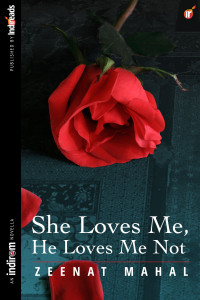
Zeenat has published two ebooks with Indireads in 2013 and She Loves Me, He Loves Me Not is her third novel. The Contract was an Indireads bestseller.

Her book Haveli was up to number 17 on amazon kindle and The Contract went up to number 9 on amazonIn.

Zeenat loves reading and writing romance and her favourite writers in the genre are Susan Elizabeth Phillips, Julia Quinn, Nora Roberts and Judith McNaught.